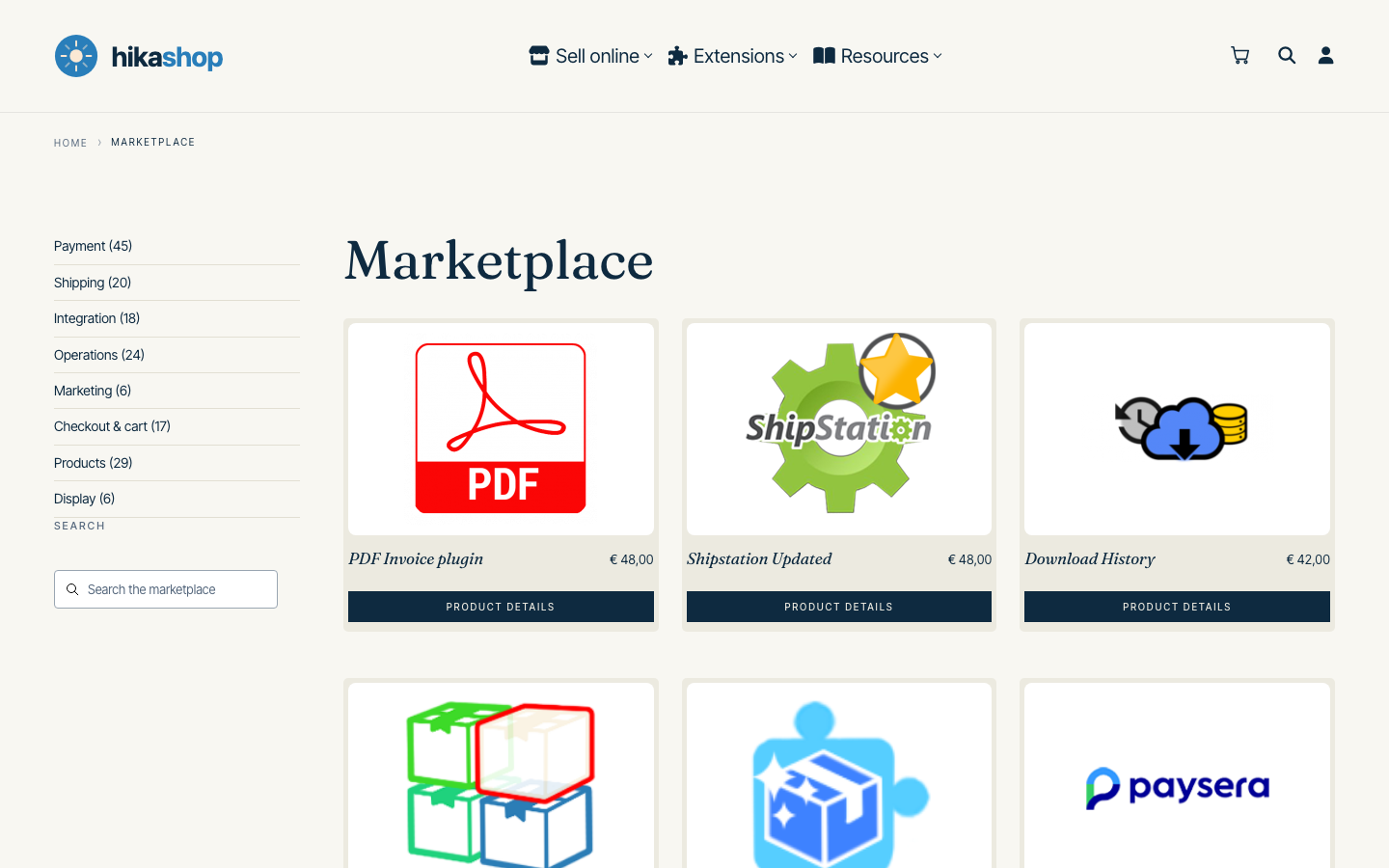
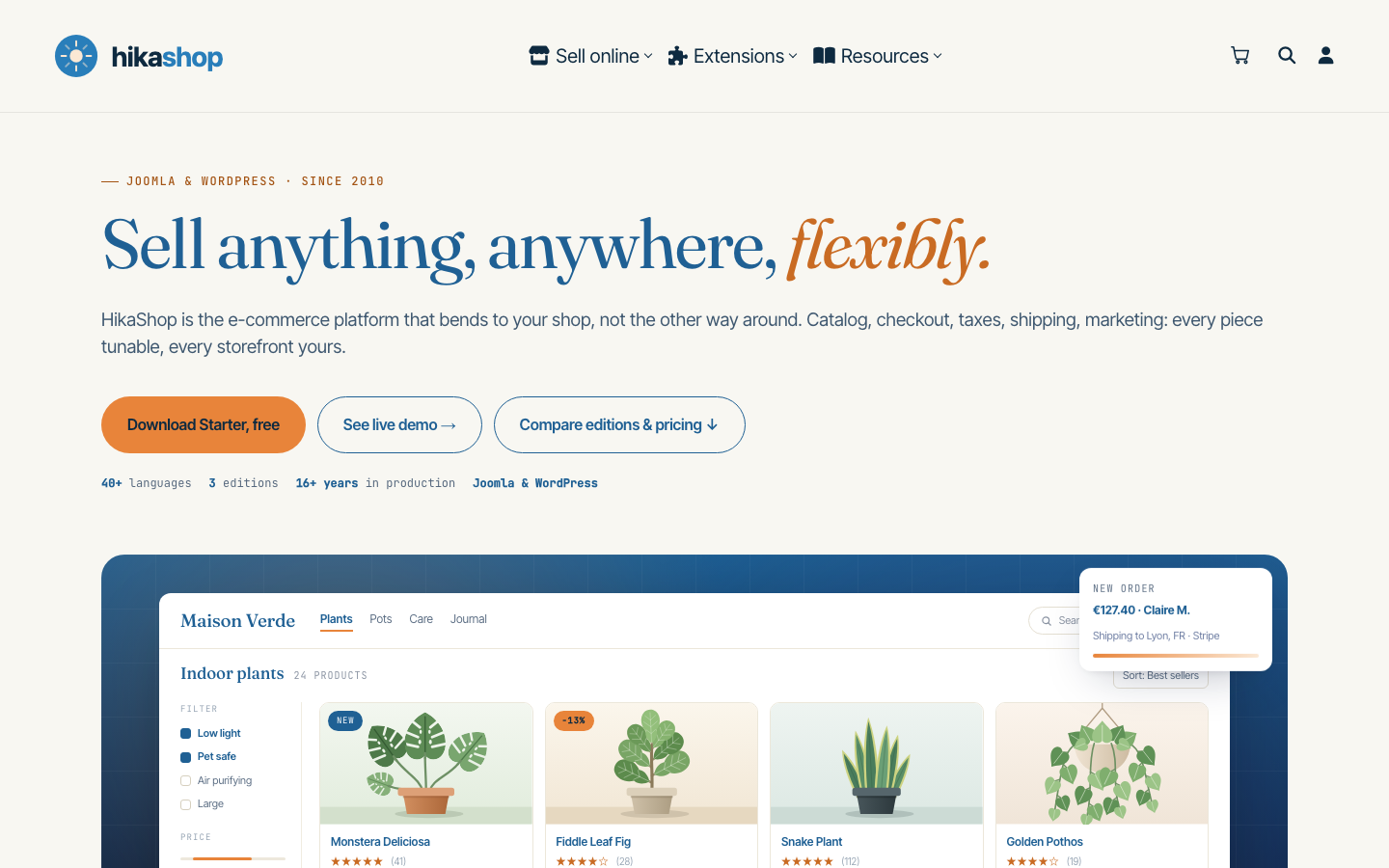
On 25 September 2026, hikashop.com moved to a brand new home. If you have visited the site, the forum or the marketplace since then, you have already seen the result: a new design, faster pages and a forum that keeps up with you. What you have not seen is everything underneath, and that is what this article is about: why we rebuilt, how we moved sixteen years of data across, and where the site now lives.
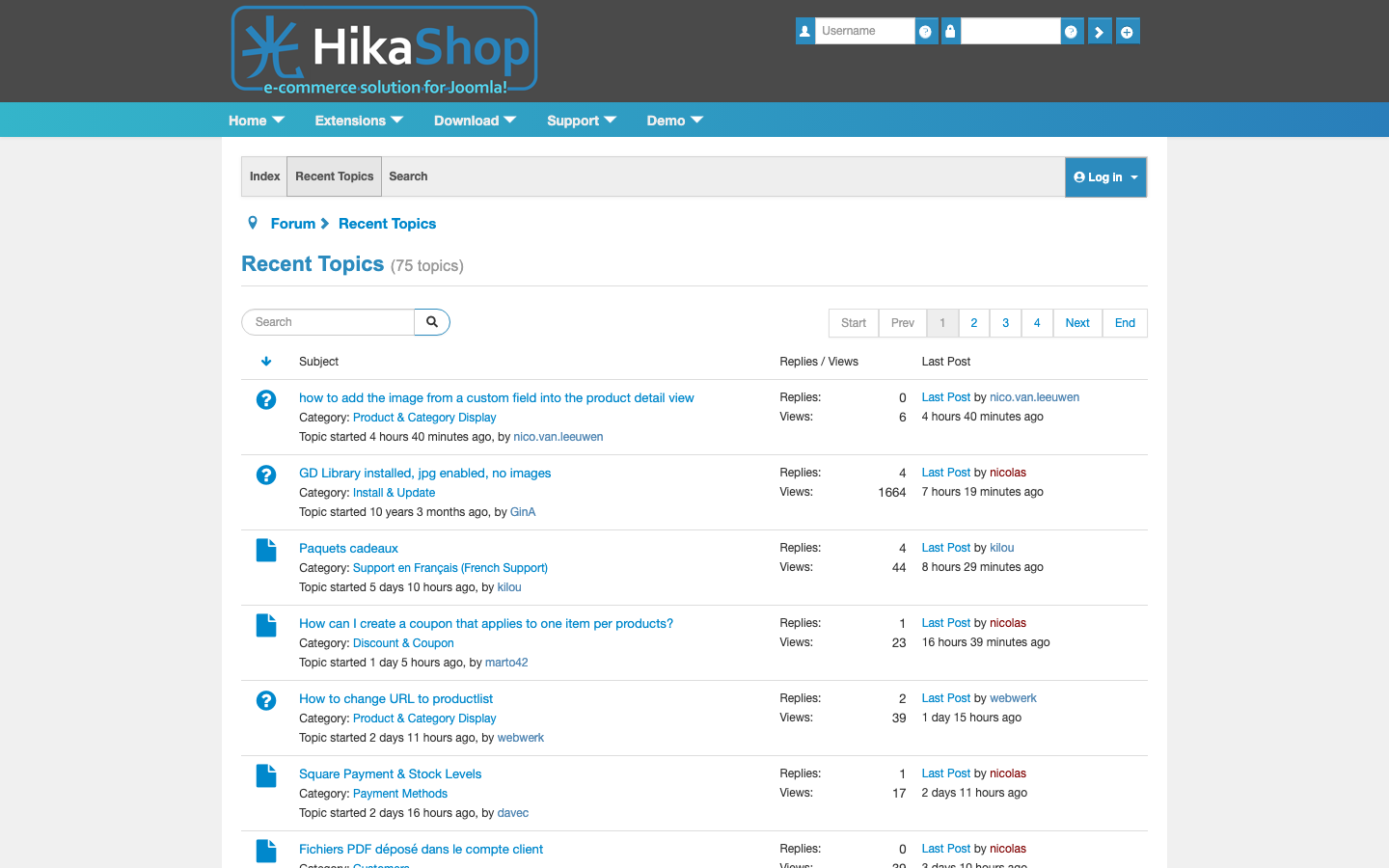
Where we started from
The old site had served us well for a very long time. It ran on a single server that did everything: the website, the forum, the shop and licence server behind your downloads and updates, our email, the CDN that serves files to about 5,700 shops, the demo sites and a pre-production copy.
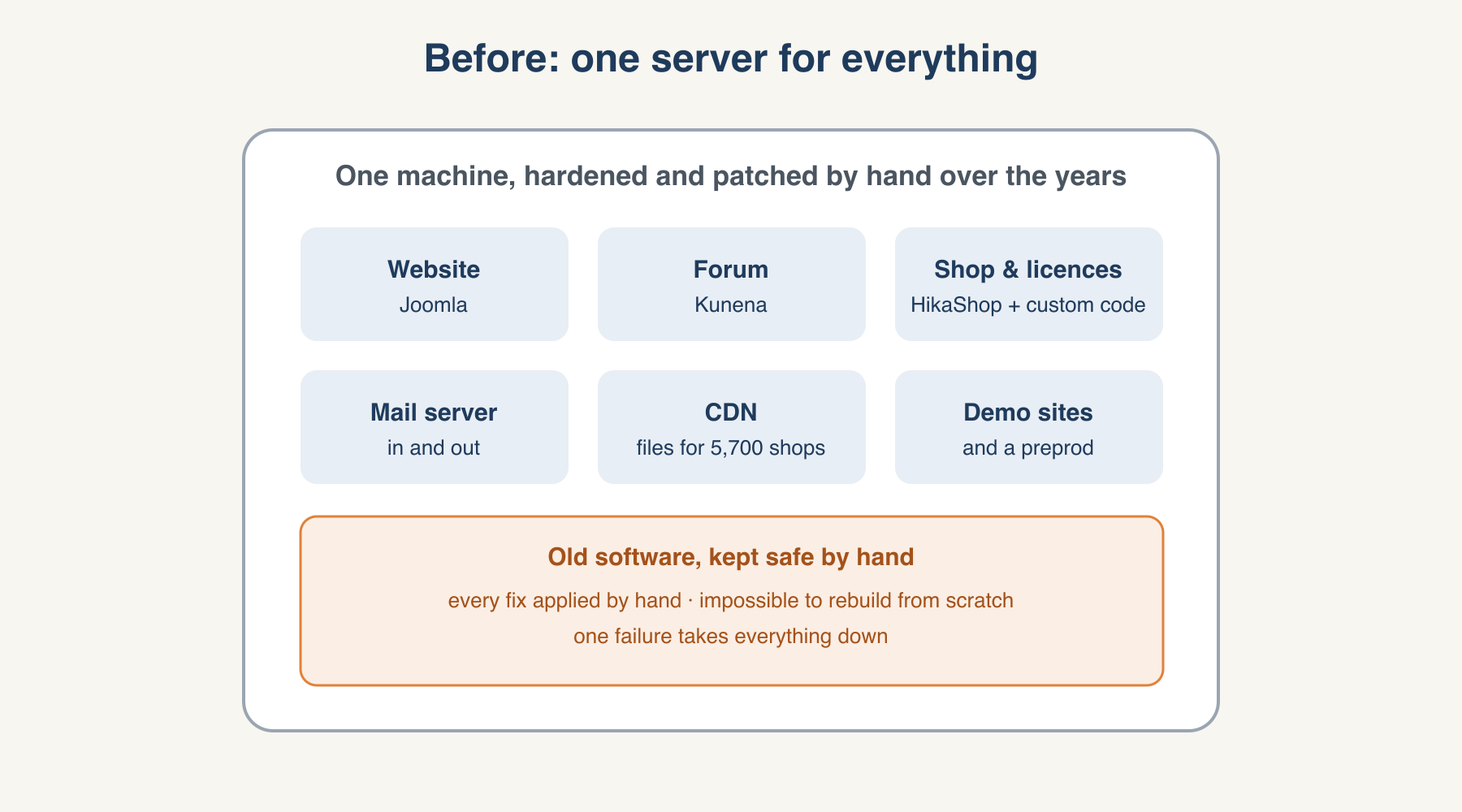
Its software was old, but it was far from left alone. Security fixes for the operating system, Joomla and the extensions were applied by hand whenever they were needed, and the server had several layers of protection: a firewall, files that could not be modified by the web server, and more. Over the years, it held.
The world around it changed, though. Security fixes come out faster and more often than ever, and with AI tools, the time between a fix being published and an exploit circulating keeps shrinking. Patching an old stack by hand, one fix at a time, does not keep up with that pace. It also left us with a machine nobody could rebuild from scratch: years of hand-made changes, template overrides, forum plugins and our own licence and update component, first written many Joomla versions ago.
And there was a lot of data to carry over: about 84,000 user accounts, more than 360,000 forum messages in some 66,000 topics, almost 500 documentation and blog articles, and every licence and download of our customers.
So we decided not to upgrade the old site in place, but to build a new one next to it, on a current foundation that can be updated quickly, and move the data across.
A site you can rebuild from scratch
The main rule of the new site is simple: nothing is configured by hand on the server. Everything that makes up hikashop.com lives in a git repository: the Joomla version, the extensions and their settings, the template, the menus, the redirects of old addresses, and the small fixes we apply to third-party extensions while waiting for them to be released upstream. One command builds a complete, working site from an empty folder; a throwaway copy for testing takes about four minutes.
The current stack:
- Joomla 6.1 and Kunena 7 for the forum;
- HikaShop 6.6, of course, with HikaMarket, HikaSerial and our licence server, modernised for Joomla 6;
- PHP 8.5 and MariaDB 11;
- our new Vessel template, available for your own shops on Joomla and WordPress.
Docker images
The site is packaged as Docker images. A PHP image contains PHP, its extensions and the whole site code; an nginx image serves the static files and passes the rest to PHP; MariaDB holds the database; a small container runs the scheduled tasks. The images are built and checked for known vulnerabilities before they leave our machines, stored in our own registry, and the production server only ever downloads them. Updating the site means pulling a new image and restarting a container, and going back means starting the previous one.
Caddy in front
In front of the containers, Caddy handles what a visitor's browser meets first: HTTPS certificates, renewed automatically, the redirection of old addresses, security headers, and the turning away of abusive bots before they reach Joomla.
Three servers, each with one job
Instead of one big machine doing everything, the work is now split across three small servers:
- production runs hikashop.com, the forum, the shop, the download and update server, and the CDN;
- tools runs what we build the site with: our git forge and continuous integration, backups and monitoring, our helpdesk and the newsletter;
- demos runs the Vessel demo and the other demo sites, kept apart from the real shop, and the test sites we create to reproduce your issues.
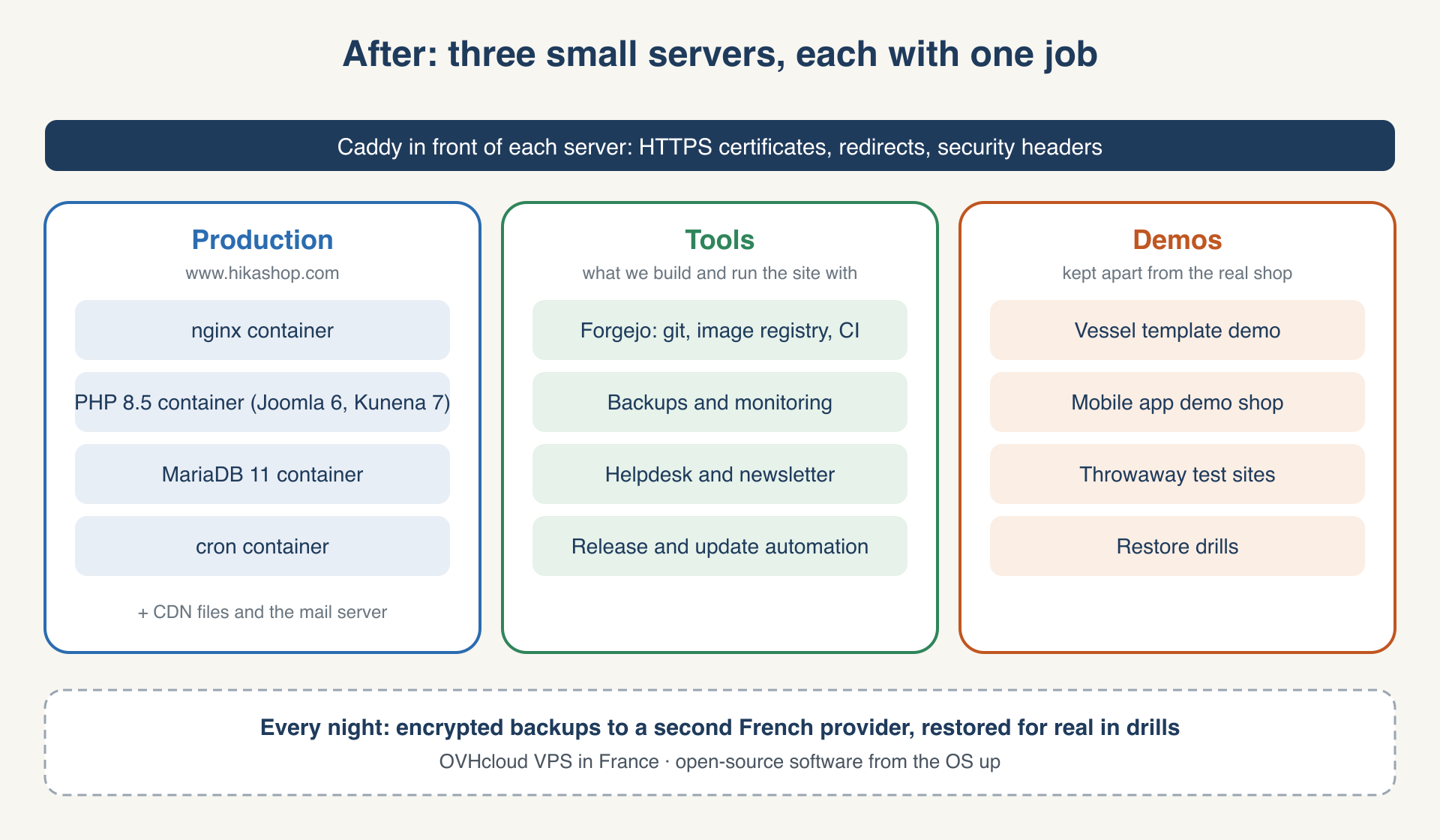
Every night, everything is backed up, encrypted, to the tools server and to a second French provider, with an extra database copy every hour. A backup is only worth something if it can be restored, so we restore them for real: the whole production server comes back on a blank machine in about eighteen minutes.
Moving sixteen years of data
The hardest part was not building the new site, it was moving the data into it. Joomla and Kunena both had several major versions to jump: tables changed, fields moved, and our own components had their own history.
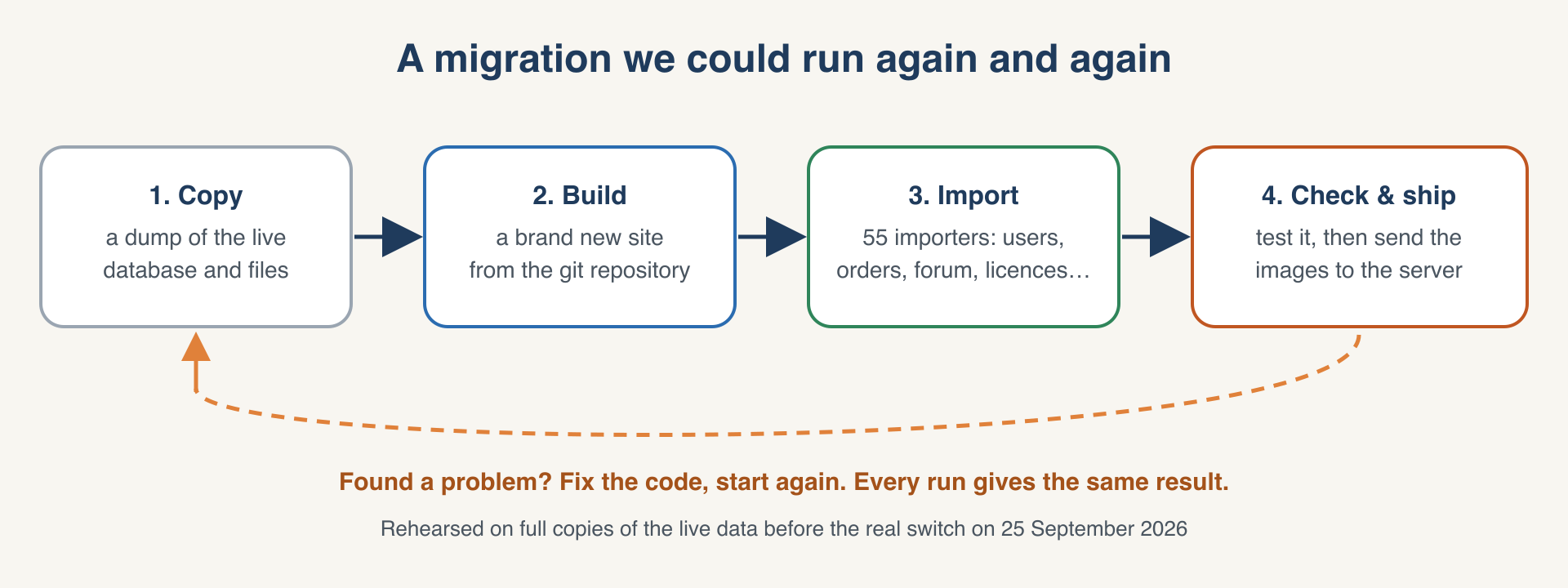
Instead of a one-shot conversion, we wrote a migration that can be run again and again. It takes a copy of the live database and files, builds a brand new site from the repository, then runs 55 importers, one per kind of data: users, orders, licences, forum categories, topics, messages, attachments, articles, and so on. Each importer can be run twice with the same result, so when a test showed something wrong, we fixed the importer and simply started over.
A few things we were especially careful about:
- Your account works as before. Passwords were carried over, so nobody had to reset theirs.
- Old links still work. Forum topics, documentation pages, blog posts and marketplace products kept their addresses, or redirect to their new ones. The old
.htmlendings, old language prefixes and old blog paths are all redirected.
We ran the full migration on fresh copies of the live data several times in the week before the switch, timing each step. On 25 September, we froze the old site, took a final copy, ran the migration one last time, checked the result and pointed hikashop.com to the new server. It was live the same afternoon, and the old site stayed untouched in case we had to switch back.
More than a move
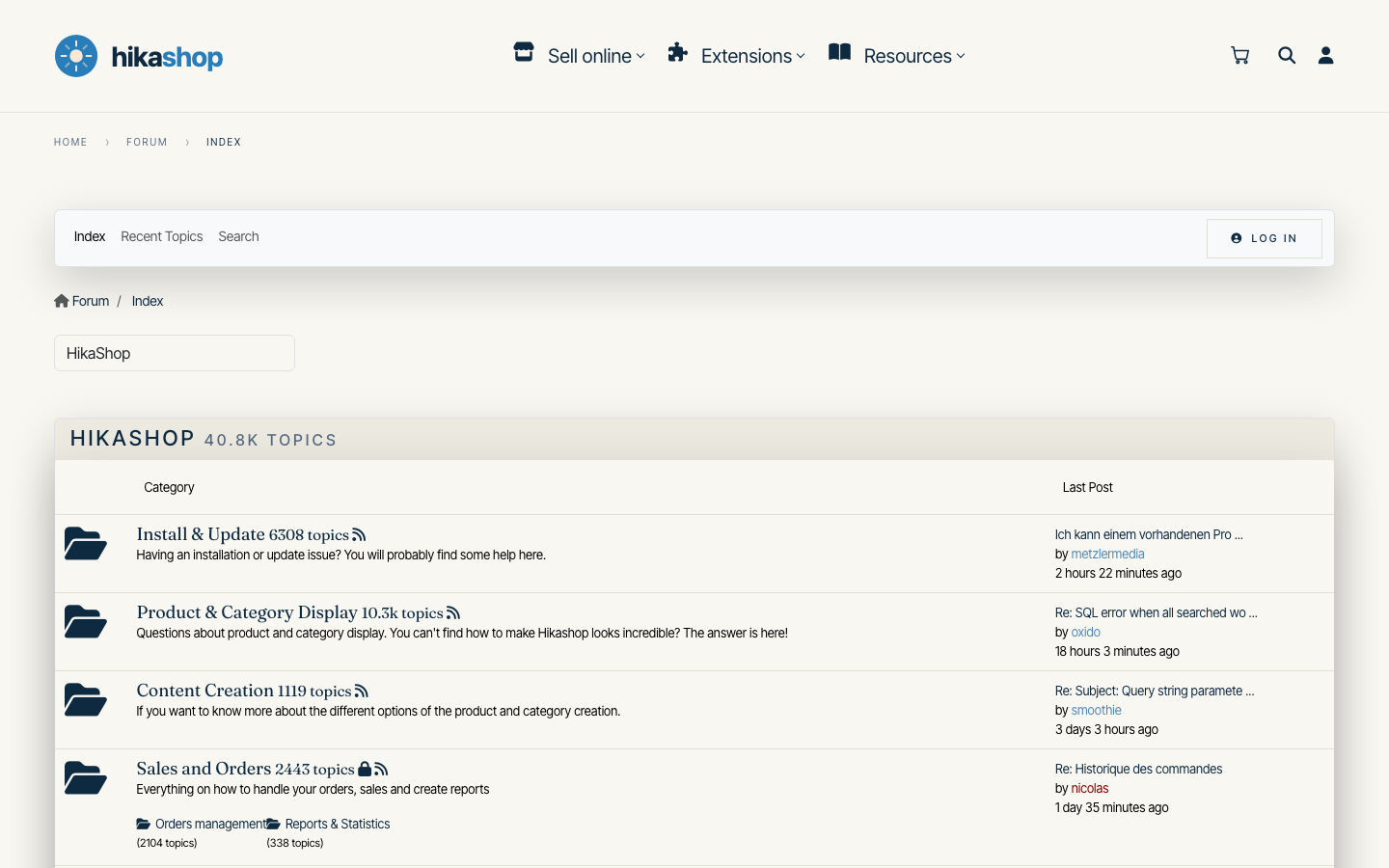
Since the whole site was being rebuilt anyway, we used the occasion to rework what you use every day:
- A new home page, rebuilt from scratch with the blocks and layouts Vessel provides, the same tools you get when you use Vessel for your own shop.
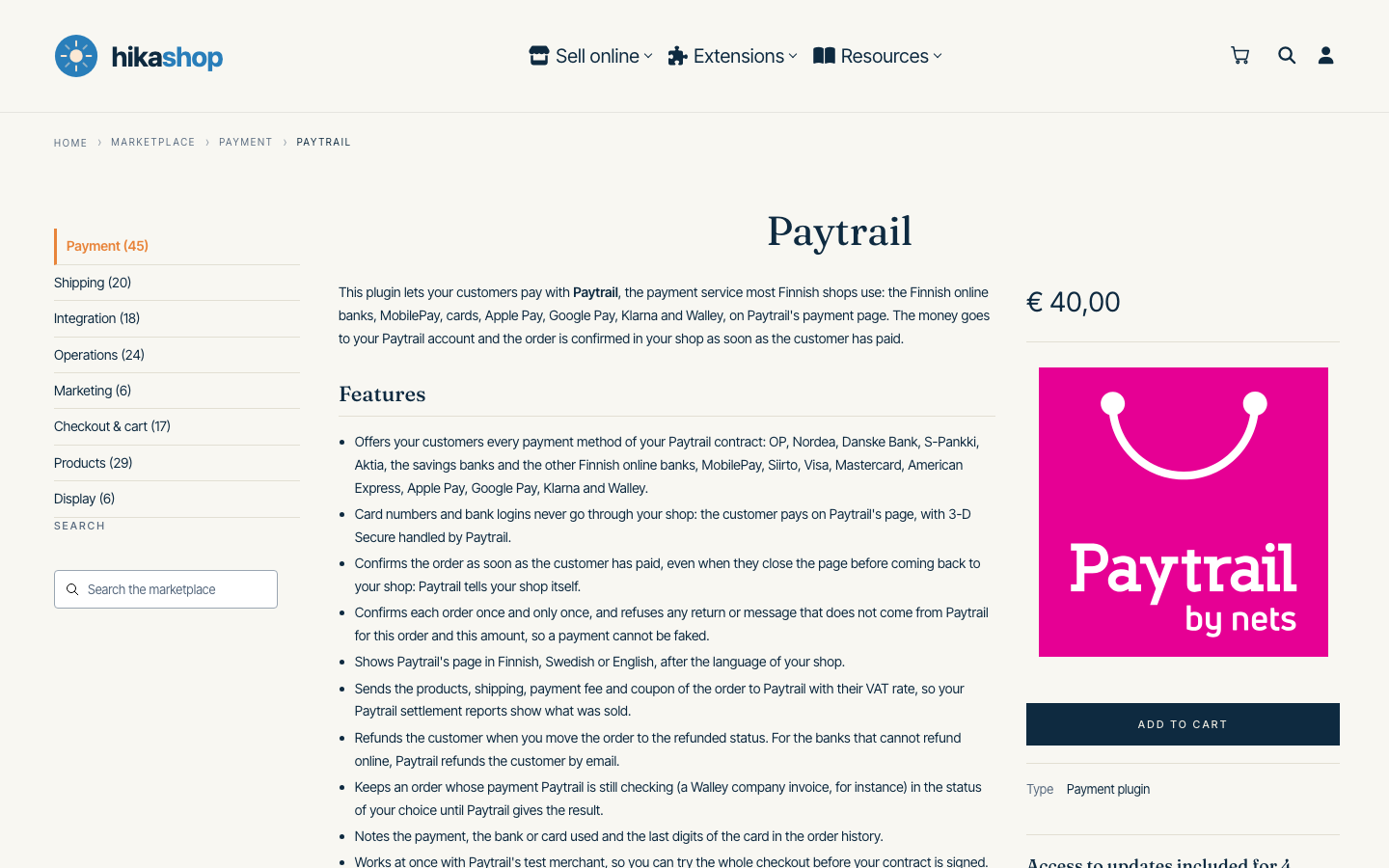
- New product pages on the marketplace: the description, the features and the settings first, the price and the button to the side, and the categories always at hand to go on browsing.
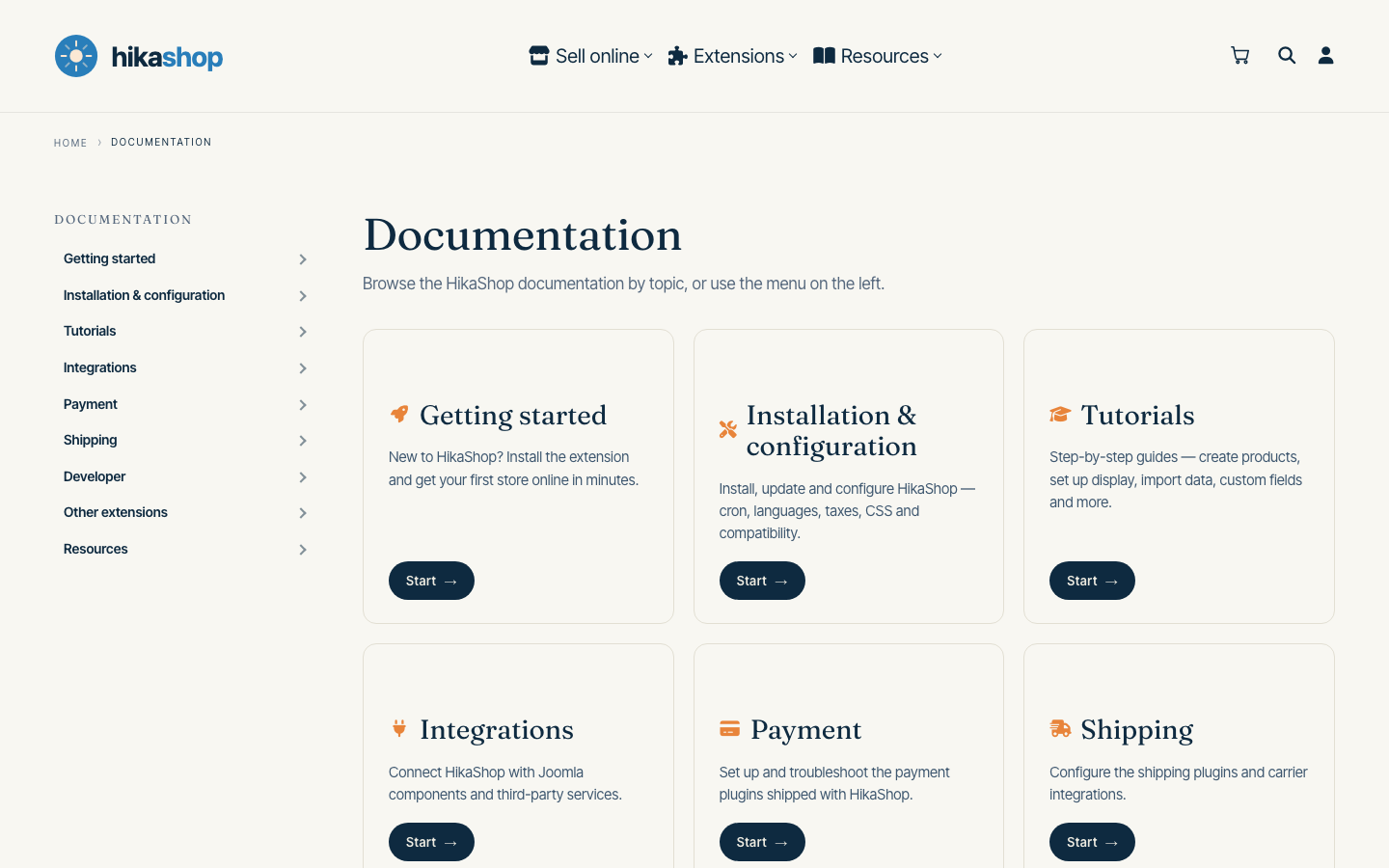
- Documentation that is easier to go through: the guides grouped by topic, from getting started to payment, shipping and development, with a menu that follows you from page to page.
- A clearer subscriptions area in your account, to see your licences, download your extensions and renew them.
Sovereign hosting
Rebuilding from scratch was also the occasion to choose where, and on what, the site runs. Hikari Software is a French company, under French law, and so are our obligations towards you: your account, your orders and your licences are personal data under the GDPR. Some foreign laws, such as the American CLOUD Act, can require a provider based in that country to hand over the data it hosts, wherever its servers are, and without the customer being told. The simplest way to be able to promise you that your data is not accessed in secret by anyone else is not to put it with providers subject to such laws. So we made these choices:
- Open-source software. From the operating system up, the site and the tools around it run on open-source software: Debian, Docker, Caddy, nginx, PHP, MariaDB, Joomla, Kunena and HikaShop, Forgejo for our code, FreeScout for our helpdesk, Listmonk for the newsletter, restic for the backups, Uptime Kuma and Beszel for monitoring. No licence can be withdrawn from us, and every piece can be inspected.
- French hosting, in France. The three servers are VPS from OVHcloud, a French company, in its datacenter in Gravelines, in northern France. Our domain is managed at OVHcloud too, and the backups go to Scaleway, another French provider, in Paris.
- Emails sent from France. The emails the site sends you, from your account and order emails to forum notifications, go out through Scaleway's transactional email service. Our incoming mail is handled by our own mail server.
For you, this means your account and order data stay in France, under European law, with French providers. For us, it also means no lock-in: since everything is described in a repository and built from open-source parts, the whole site could move to another host in a few hours.
What's next
The new foundations already let us move faster. We publish plugin and template updates to the marketplace with one click, and test your issues on fresh test sites in minutes. Every night, our systems check for updates of the software we use on our servers and apply them automatically. We have the same in place for the libraries our extensions use, so that a security fix released upstream can be tested and served to you in less than 24 hours.
If you notice anything that does not work as it used to, an old link that leads nowhere or a missing attachment, please tell us on the forum: we would rather fix it than leave it there.